Family Activities
J. Douglas Williams Park: Where a Big Group Can Sit Down Together
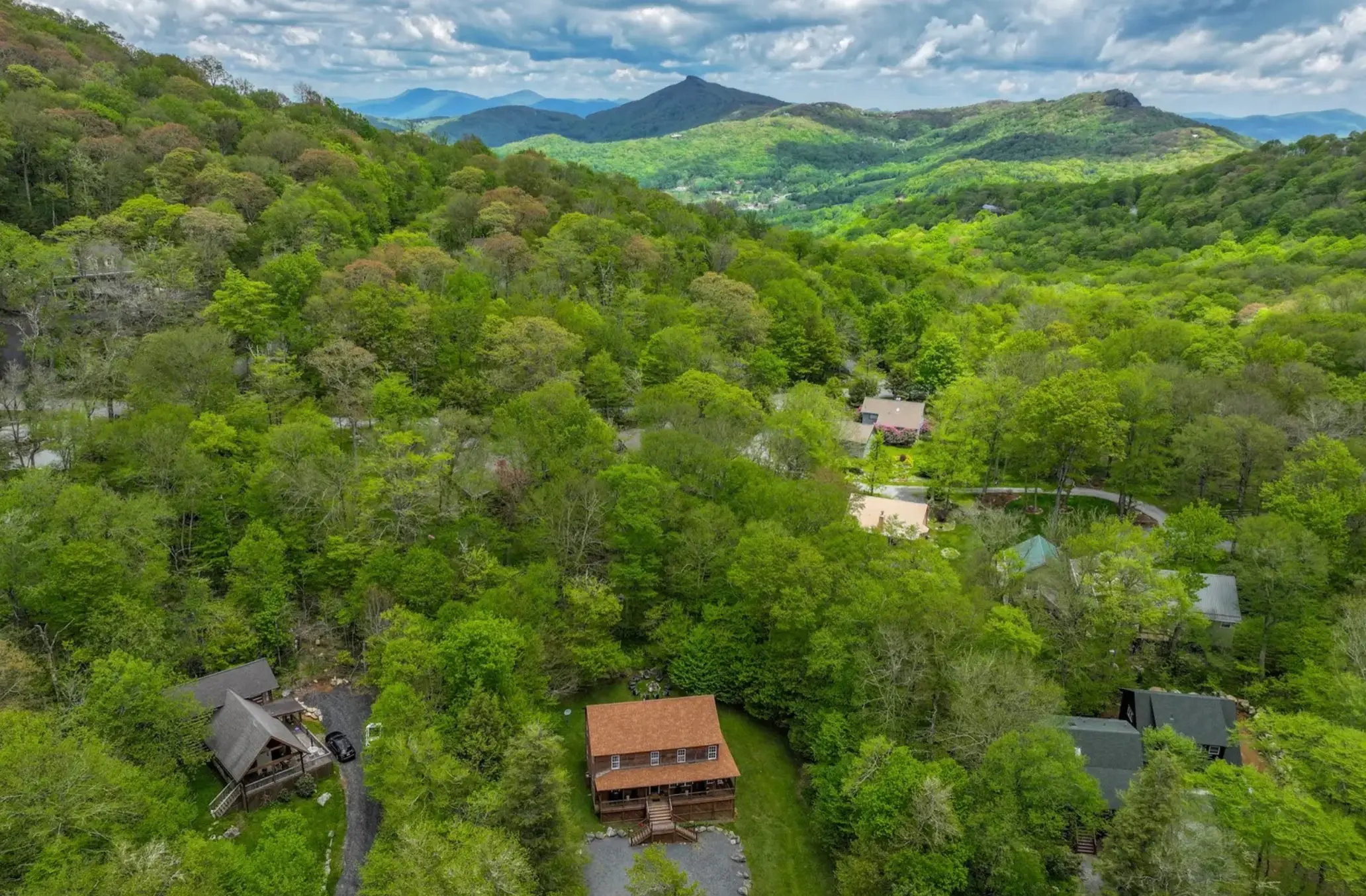
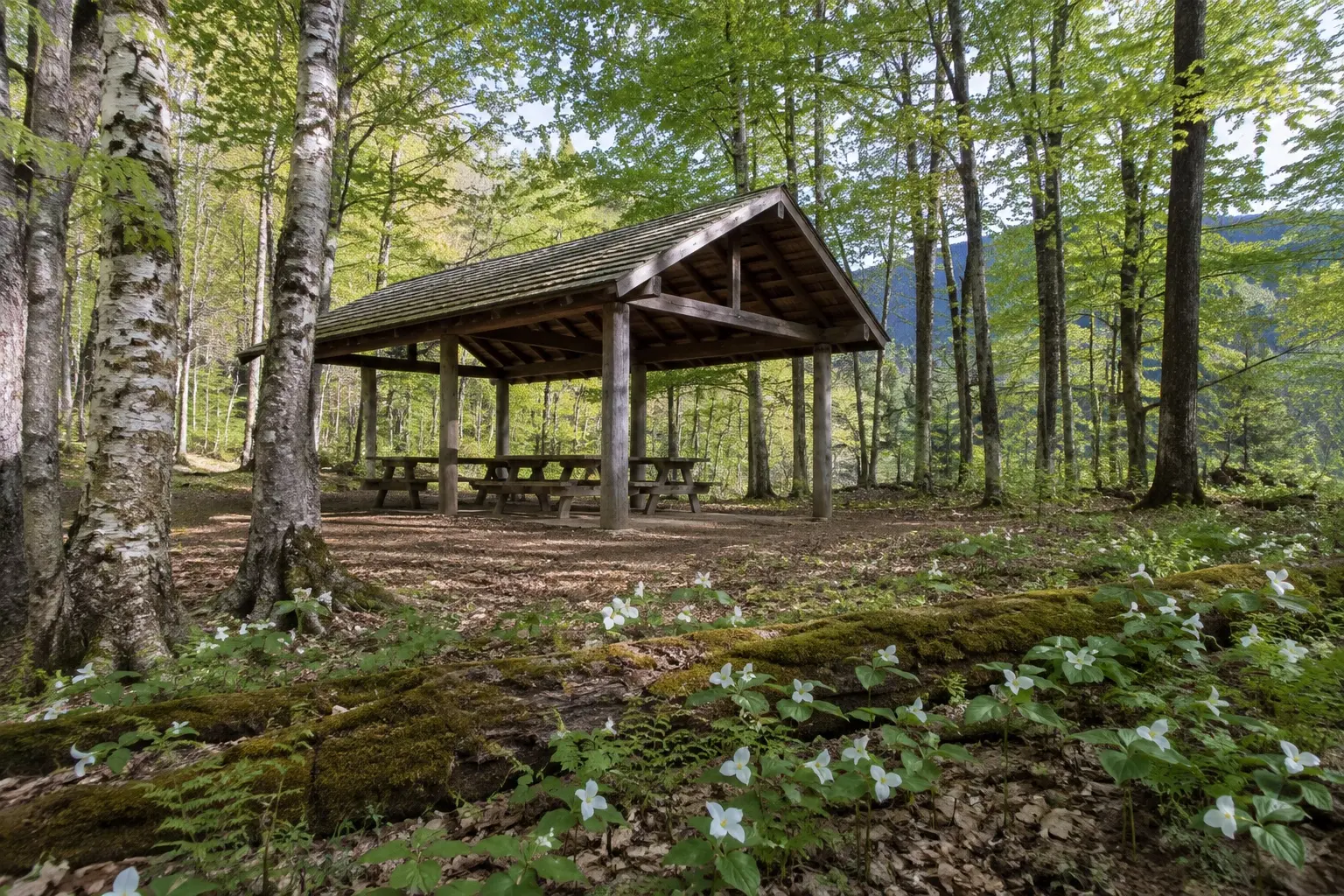
The house sleeps sixteen and seats eleven indoors at one time. Fourteen wooded acres in the village hold a reservable picnic pavilion with tables and grills, which is the answer when the whole group wants one meal together. Confirm the size of your party with Village Hall when you book it.
Here is a constraint that shapes more trips to this house than anyone expects when they book it.
The house sleeps sixteen. Indoors, it seats eleven at one time: a dining table seating eight, plus three stools at the kitchen island. That is a real kitchen and a real dining room, and it is not sixteen chairs. Plenty of stays never need everyone at the table at once. For the one meal where the whole party does want to sit down together, it is worth knowing where to look.
J. Douglas Williams Park is that answer, and it is in the same village.
What it is
Fourteen wooded acres in the village of Sugar Mountain, on Sugar Mountain Drive, about half a mile uphill from the golf and tennis center. Wooded, and described by the village as quiet.
It has a large picnic pavilion, picnic tables and grills. Those are available to anyone using the park, unless the pavilion has been reserved for a group.
It is open daily during daylight hours, year round, weather permitting.
That combination is the point. A covered pavilion with tables and grills, in the same village as the house, is the difference between “we cannot all eat together” and “we are eating outside on Thursday.” It is the one facility nearby that answers the seating problem rather than working around it.
Reserving the pavilion
The entire pavilion can be reserved for a gathering. The process is a phone call to Village Hall and an application form.
We are deliberately not publishing a fee, because that is exactly the kind of figure that changes without telling anyone. Call and ask; it is one phone call and it is worth making early rather than the week you travel.
Two things to settle on that call. We publish no capacity figure, because the village does not state one in the source we worked from, so tell them the size of your party and let them confirm it rather than taking a number from us. And a reservation is a reservation, which cuts both ways: the pavilion is available to park users unless it has been reserved for a group, so it may already be somebody’s Thursday.
Ask both when you call, and the rest of this is straightforward.
Two rules that are not decorative
Alcohol is permitted. Glass containers are not.
Take that literally when you pack the car. It is the sort of rule that gets read as guidance and is not: cans and plastic, not bottles and jars. If you are stocking up on the way through Banner Elk anyway, our restaurants and groceries guide covers where to shop and the North Carolina liquor rule that catches out-of-state visitors.
Take all your trash with you when you leave. The village states the reason plainly, and so will we: bears.
There is no version of this where a bag left beside a bin is fine. The village gives bears as the reason, which is the only reason anyone needs, and the whole thing is solved by putting the bag in the car.
What is actually growing there
The park is more than a picnic site, which is a reason to walk through it rather than only eat in it.
The park sits between roughly 4,000 and 4,200 feet, and is classified as Southern Appalachian Northern Hardwood Forest, a globally rare and localized community type. The canopy is yellow buckeye, yellow birch and sugar maple.
It also holds a Boulder Field Forest, an uncommon high-elevation community that forms on steep north-facing slopes. Headwater streams here feed Bee Branch, a tributary of the Elk River.
For a group coming primarily for the pavilion, none of that is the reason to come. It is a reason to spend the fifteen minutes after lunch walking under the trees rather than packing up straight away.
Why it exists at all
This is not leftover land that nobody built on.
The park was preserved and developed by the Sugar Mountain Community Association, which then gave it to the village. In 2004, Blue Ridge Conservancy placed a conservation easement on it.
That is a deliberate sequence: a group of residents preserved and developed it, transferred it to the village, and then had a conservation easement placed over it. Fourteen acres of rare forest inside a resort village exists because people decided it should.
Spring, if your timing is lucky
April and May bring substantial wildflower blooms, including trilliums, trout lily and several violets. The village publishes a longer species list. We have included only a sample here, because that list belongs on its own page rather than ours.
If you are here in late spring, this is the walk to take.
Before you go
The village’s page for the park is the source for anything current, including the reservation form and the Village Hall number.
For what else fills an afternoon with a mixed-age group, family activities near Sugar Mountain has the wider range. This park is the low-effort end of it, and for a group of sixteen wanting one meal outdoors together, it may be the most useful thing in the village.